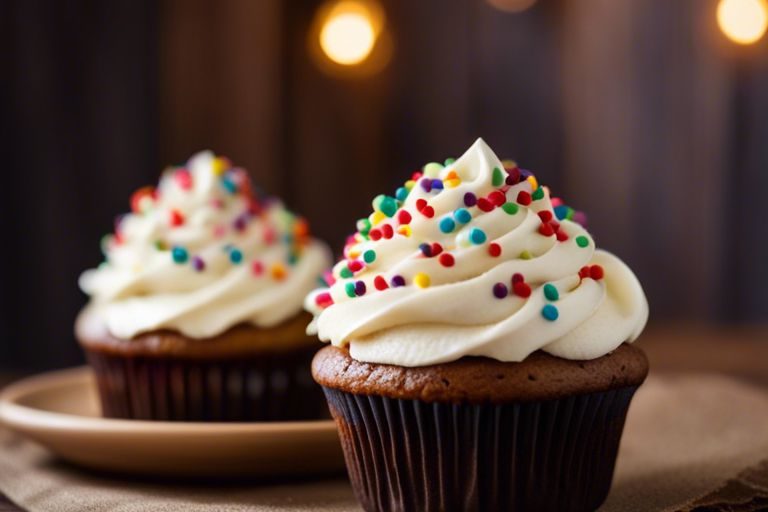
Is it possible to make vegan cupcakes without sacrificing flavor or texture?
Before You Start
- Basic measuring tools: liquid and dry measuring cups, plus a kitchen scale for accuracy
- Standard baking equipment: a cupcake pan, paper liners, and an electric hand or stand mixer
- No advanced baking experience needed – but a willingness to understand why each ingredient is there will take you far
- Unsweetened, unflavoured plant-based milk on hand (oat, soy, or almond all work)
A single gram of baking soda, left out of a vegan batter, can be the difference between a cloud-light cupcake and a flat, dense disappointment. We know this because we have made that mistake – more than once.
We come to vegan baking not as lifelong advocates, but as a classically trained pastry team that was forced into it. A dairy allergy has a way of rewriting your recipe cards. What we discovered, through a fair number of failed batches and careful note-taking, is that vegan cupcakes are not a lesser version of the real thing. They are a chemistry problem waiting to be solved.
The core challenge is this: eggs, dairy milk, and butter each do specific, measurable jobs inside a batter. They bind, they add moisture, they create lift. Remove them without understanding those jobs, and the whole structure collapses – sometimes literally.
In this guide, we walk through every layer of the process. We start by asking whether replicating a classic cupcake is even the right goal. We then look at how to make every plant-based ingredient carry its full weight, cover our go-to swaps for eggs, dairy, and butter, and flag the seven rookie mistakes we made so you do not have to. We finish with a tested first-batch recipe built for beginners.
No substitution is made blindly here. Every swap has a reason.
Before You Start
- No prior vegan baking experience needed – we start from scratch
- Basic baking familiarity helps: measuring cups (liquid and dry), a cupcake pan with liners, and an electric mixer
- Accurate measurement matters more here than in most baking – estimations lead to poor results
The Big Question: Can We Really Replicate Classic Cupcakes?
Egg-free, dairy-free baking carries a reputation it does not deserve. We hear it constantly: remove the butter, lose the richness; remove the eggs, lose the structure. That framing is wrong, and we can show you exactly why.
Vegan cupcakes contain no eggs, no dairy milk, and no butter. That sounds like a long list of missing things. But every one of those ingredients performs a specific chemical job in the batter – and once we understand those jobs, we can assign them to plant-based ingredients that perform equally well.
Eggs are the clearest example. They act simultaneously as binders (holding the batter together), leavening agents (trapping air for rise), and a source of moisture and structure. That is a lot of work for one ingredient. No single vegan substitute does all three at once, which is precisely why choosing the right replacement for each recipe matters so much.
Vegan baking fails when we treat substitution as a simple swap. It succeeds when we match each substitute to the specific function the original ingredient performed in that recipe.
Leavening – the rise and fluffiness we expect from a good cupcake – does not depend on eggs at all. Leavening agents like baking powder and baking soda react with acids in the batter to produce carbon dioxide bubbles, and those bubbles are what make a cupcake light. In vegan batters, this reaction becomes the backbone of the entire texture.
Moisture is equally straightforward to replace. Plant-based milks, oils, and fruit purées all deliver the liquid content a batter needs. Soy milk mixed with a small amount of acid – lemon juice or apple cider vinegar – actually curdles, behaving almost identically to buttermilk, which produces a noticeably fluffy crumb.
We have tested batters where the vegan version outperformed the original on moisture retention. Not matched it. Outperformed it.
The gap between a flat, gummy vegan cupcake and a genuinely excellent one almost always comes down to one thing: whether the baker understood what each ingredient was actually doing before they replaced it.
Before You Start
- Basic measuring tools ready: dry measuring cups, liquid measuring cups, and measuring spoons
- Ingredients at room temperature unless the recipe states otherwise
- Cupcake pan lined and oven preheated before you begin mixing
- Assumes you already know vegan cupcakes can match traditional ones in quality
Step 1: Understand What Every Ingredient Actually Does
Every gram in a cupcake recipe has a job. Not a suggestion – a job. We’ve learned, sometimes through spectacular failures, that treating ingredient quantities as rough estimates is the fastest way to end up with a flat, rubbery, or crumbling result.
Three categories of ingredients do the heavy lifting in any cupcake batter: leavening agents, binders, and moisteners. Leavening agents – baking soda and baking powder – react with acids in the batter to produce carbon dioxide bubbles. Those bubbles are what make a cupcake rise and feel light.
No bubbles, no lift. It’s that simple.
Binders hold the structure together. In traditional baking, eggs do this work. In vegan baking, we replace that function with ingredients like flax eggs or aquafaba – but we’ll get to those specifics shortly. The point right now is that something must perform that binding role, or the cupcake falls apart.
Moisteners – plant-based milks, oils, fruit purées – keep the crumb tender and prevent the whole thing from drying out. Each one behaves differently in batter, which is why swapping them casually without understanding their chemistry tends to go badly.
Why Precision Is Non-Negotiable
A mere gram too much flour tightens the crumb. A fraction too little leavening and the rise collapses. We measure everything – and we mean everything – with proper tools, not eyeballed spoonfuls.
Over-mixing is the other silent killer. Once wet and dry ingredients combine, gluten – the protein network in flour – starts developing. Mix too long and that network becomes tight and tough.
Mix until just combined. Small lumps in the batter are completely acceptable.
Preferable, even.
Once you combine wet and dry ingredients, chemical reactions begin immediately. Have your lined pan ready and your oven preheated before you mix – delay means lost leavening power and a denser cupcake.
Acids deserve a specific mention here. Lemon juice, white vinegar, apple cider vinegar – these aren’t flavoring agents in vegan batters. They activate the baking soda and baking powder. Skip the acid and your leavening agents sit there doing nothing.
The real challenge, then, isn’t finding substitutes. It’s finding substitutes that fulfill the exact functional role of what they’re replacing – binding, lifting, moistening – at the right quantity, in the right combination.
Our Go-To Swaps for Eggs, Dairy, and Butter
A cupcake batter built on the wrong substitution fails in a specific, predictable way – dense crumb, gummy center, flat top. We’ve produced every one of those failures in our kitchen, and each one taught us that the choice of substitute matters as much as the swap itself.
Replacing Eggs
Eggs do three jobs at once: bind, leaven, and add moisture. No single vegan substitute does all three equally well, which is why matching the right one to your recipe is non-negotiable.
- Flax egg: Mix 1 tablespoon of ground flaxseed with 3 tablespoons of water. Let it sit for 10–15 minutes until it forms a thick gel. This is our default binder for dense, fudgy cupcakes.
- Aquafaba: The liquid from a can of chickpeas. Use 3 tablespoons, lightly whisked, per egg. It mimics egg whites with surprising precision and keeps crumb structure light.
- Applesauce: 1/4 cup per egg. Adds moisture and a very mild sweetness – works best in spiced or chocolate batters where the flavour disappears into the recipe.
- Mashed banana: Half a medium banana per egg. Contributes binding and moisture, but the banana flavour is present. Use it deliberately, not as a neutral swap.
One thing worth flagging early: eggless batters rely heavily on the reaction between your leavening agents and any acids in the recipe. Get that balance wrong, and no egg substitute will save the rise.
Never use a flavoured or sweetened plant-based milk in a recipe that calls for plain dairy milk – vanilla oat milk, for example, will throw off both the sweetness and the flavour balance of your final cupcake.
Replacing Dairy Milk and Butter
Plant-based milks replace dairy 1:1 by volume. Oat, almond, soy, and coconut milk all work. Our preference is soy milk when a recipe needs vegan buttermilk – stir in a teaspoon of apple cider vinegar or lemon juice, wait two minutes, and the high protein content causes it to curdle just like the real thing, adding genuine lift and tenderness.
For butter, the application decides the substitute. Coconut oil and canola oil work well inside the batter. Vegetable shortening is a reasonable all-rounder. For frosting, use vegan butter sticks exclusively – the stick form holds structure under a mixer in a way that tub spreads simply do not.
Getting these swaps right is the straightforward part. What trips up even careful bakers is what happens after the batter comes together – the small procedural errors that no substitution chart will warn you about.
Avoiding the 7 Rookie Mistakes We All Made
Before You Start
- You understand what flax eggs, aquafaba, and vegan buttermilk do in a batter
- You know the basic vegan swaps for eggs, butter, and dairy milk
- You have measuring cups, cupcake liners, and a mixing bowl ready
Flat, rubbery, weirdly sweet cupcakes – we have all pulled that tray out of the oven and wondered what went wrong. Bad vegan cupcakes are almost never the fault of the ingredients. They are the fault of technique. Every single failure we have made in our own kitchen traces back to one of these seven mistakes.
Step 1: Stop Over-Mixing the Batter
Over-mixing is the single biggest texture killer in vegan baking. Every extra stir develops more gluten in the flour, which turns your cupcake from light and tender into something closer to a bread roll. Mix until the dry ingredients just disappear – small lumps in the batter are completely fine.
This matters even more without eggs, because we have no protein network to counterbalance that tough gluten structure.
Step 2: Choose Your Milk Carefully
We learned this one the hard way: vanilla-flavoured oat milk in a lemon cupcake is a disaster. Use unsweetened, unflavoured non-dairy milk unless the recipe specifically calls for something else. The flavour difference is night and day.
Step 3: Never Skip the Acid
Acids like lemon juice, white vinegar, or apple cider vinegar are not optional extras. They activate your baking powder and baking soda, producing the carbon dioxide bubbles that make your cupcakes rise and stay fluffy. Skip the acid and your leavening agents just sit there, doing nothing.
Once you combine your wet and dry ingredients, the chemical reaction starts immediately – get the batter into the oven quickly, or you will lose the leavening power before the heat can set it.
Step 4: Sift Your Flour
Skipping this step adds density you do not want. Sifting breaks up clumps and aerates the flour before it even hits the bowl. A mere extra minute of effort makes a measurable difference in the final crumb.
Step 5: Fill Liners Correctly
Fill each liner no more than two-thirds to three-quarters full. Go higher and the batter spreads sideways onto the pan instead of rising upward – the classic “muffin top” problem.
Step 6: Cool Completely Before Frosting
Warm cupcakes melt frosting. Completely. We are talking a sliding, greasy mess rather than clean, defined swirls. Give them at least 30 minutes on a wire rack.
Step 7: Match Your Substitute to the Job
Not every egg substitute works in every recipe. A flax egg (1 tablespoon ground flaxseed mixed with 3 tablespoons water) binds beautifully but adds no lift. Aquafaba adds lightness.
Applesauce adds moisture. Choosing the wrong one for the wrong recipe is why so many beginners feel confident baking with confidence is just around the corner – and then hit a wall on their very first attempt.
A tested vegan recipe already has these decisions made for you, which raises an obvious question: why would anyone start from scratch?
Before You Start
- You understand the role of flax eggs, aquafaba, vegan buttermilk, and leavening agents from earlier sections
- You know why over-mixing, skipping acid, and incorrect substitutions cause failure
- You have measuring cups (liquid and dry), an electric mixer, and a cupcake pan with liners ready
Your First Batch: The Tested Recipe Advantage
A beginner who starts with a tested vegan recipe succeeds on the first try. A beginner who starts by converting grandma’s vanilla sponge often ends up with a flat, rubbery disc and a bruised ego. We have seen this pattern repeat without exception.
This is not about playing it safe. It is about building the right foundation before you start pulling things apart. Every tested vegan recipe already has the acid-to-leavening balance solved, the correct egg substitute chosen for that specific batter, and the fat ratio dialled in. Skipping straight to conversion work before you understand how a successful vegan batter feels, smells, and behaves is the single fastest way to waste a Saturday afternoon.
How to Find a Recipe Worth Trusting
Not all vegan recipes online are created equal. We look for recipes that specify exactly which egg substitute to use and why – a recipe that calls for a flax egg (1 tablespoon ground flaxseed, 3 tablespoons water, rested 10–15 minutes) rather than just “an egg replacer” tells us the author understands binding chemistry. That specificity matters.
Reputable sources include dedicated vegan baking blogs with visible testing notes, published cookbooks from trained pastry chefs who transitioned to plant-based work, and community forums where readers post real results. A recipe with 200 comments and photos beats a polished one with none.
When vetting a recipe, check whether it uses vegan buttermilk – soy milk curdled with an acid like apple cider vinegar. That single detail signals the author knows tenderness and lift come from chemistry, not luck.
The Natural Progression from Follower to Experimenter
Once your first two or three batches succeed, the path forward is straightforward.
- Follow the recipe exactly, once – Resist every urge to adjust. This gives you a clean reference point for everything that follows.
- Swap flavours and fillings only – Change the extract, add a jam centre, dust with different spices. The structure stays intact while your confidence grows.
- Test one substitution at a time – Swap aquafaba for meringue-style frosting, or try a different plant milk, but never change two variables in the same batch.
- Document every result – A mere gram of difference in your flax egg ratio can shift texture noticeably. Write it down.
We are firm on this: experimentation earns its place after you have a successful baseline. That first clean batch is not just a cupcake – it is proof that the chemistry works, and that is the only platform worth building on.
Conclusion
Understanding what each ingredient does is the only thing standing between a flat, rubbery cupcake and one that nobody can tell is vegan. That is the single insight we want to leave with you.
We have covered a lot of ground together. Here is what matters most:
- Eggs do three jobs at once – binding, lifting, and adding moisture. Replace them with the right tool for the right job: a flax egg (1 tablespoon ground flaxseed plus 3 tablespoons water) for binding, aquafaba for lift.
- Skipping the acid is the mistake we see most often. Acids like apple cider vinegar activate your leavening agents – baking soda and baking powder – and those are the things that create the carbon dioxide bubbles responsible for a light, fluffy crumb.
- Soy milk mixed with an acid curdles exactly like buttermilk. That curdled mixture adds tenderness and lift in a way that is chemically identical to the dairy version.
- Over-mixing develops gluten and turns a promising batter into something dense and chewy. Mix until just combined – small lumps are fine.
- Tested recipes exist for a reason. Start there. Conversion experiments come later, once we understand the chemistry behind what we are changing.
Two things to do today. First, mix a flax egg right now – one tablespoon of ground flaxseed, three tablespoons of water, ten minutes of waiting – so the process feels familiar before it matters. Second, pull up a published vegan cupcake recipe and read through the full ingredient list before touching a single bowl, noting what role each item plays.
Precision built these recipes. Precision will make them work for us.